

Welcome back! Let’s have a look at a few more tips to help with your English learning.
- Watch Cartoons

Did you know that you can improve your listening skills by watching cartoons? This is a great tip for lower level learners. It works because the pictures help you to understand what is going on, and the language used is relatively simple, so it’s easier for you to pick up everyday grammatical structures. If you have a favourite cartoon in your own language, why not see whether you can find an English version: you will already be familiar with the story, so it will be even easier for you to understand.
Many cartoons include music and songs for children, so you can join in with these, and improve your oral skills at the same time. You will develop your vocabulary, pronunciation, and confidence, all while watching T.V!
(Parents, if you want your very young children to start being exposed to English, why not let them watch some English cartoons?)
- Teach Someone Else

Do you have a younger sibling, cousin, or even a parent or grandparent who would like to learn some English words and phrases? If so, why not teach them what you already know?
When you explain something to someone else, it helps you to understand it more clearly. You might explain a vocabulary word, which helps to imprint it into your memory, or a grammatical point, which helps you to understand how the language works.
If you are struggling to explain something, then you know that this is an area that you need to focus on yourself. Spend some more time learning it, so that next time you have to explain it, you’ll have no problem doing so.
You can try this with your friends too – teach them the things that you know, and let them help you with the things you’re struggling with. Help each other to learn!
- Write a Diary

You can improve your writing skills by keeping a diary in English. Just write a few sentences every day about the things that you have been doing, or things that you hope to do or achieve.
You can reinforce the structures that you already know, by using them frequently so that you don’t forget them. You can also try out new structures and vocabulary, without worrying that other people will see your mistakes.
Go back over what you have written, and try to correct the mistakes that you have made. The more you do this, the more you will start to notice and understand the correct way of using the language, and you’ll soon find that you start to use these new structures in your spoken English too!
Your diary will also provide you with a record of your English learning. In a year’s time, look back at what you wrote, and compare it to what you have written recently: you’re sure to see an improvement, and this will really help to give you confidence in your ability to continue learning the language.
- Use a Thesaurus
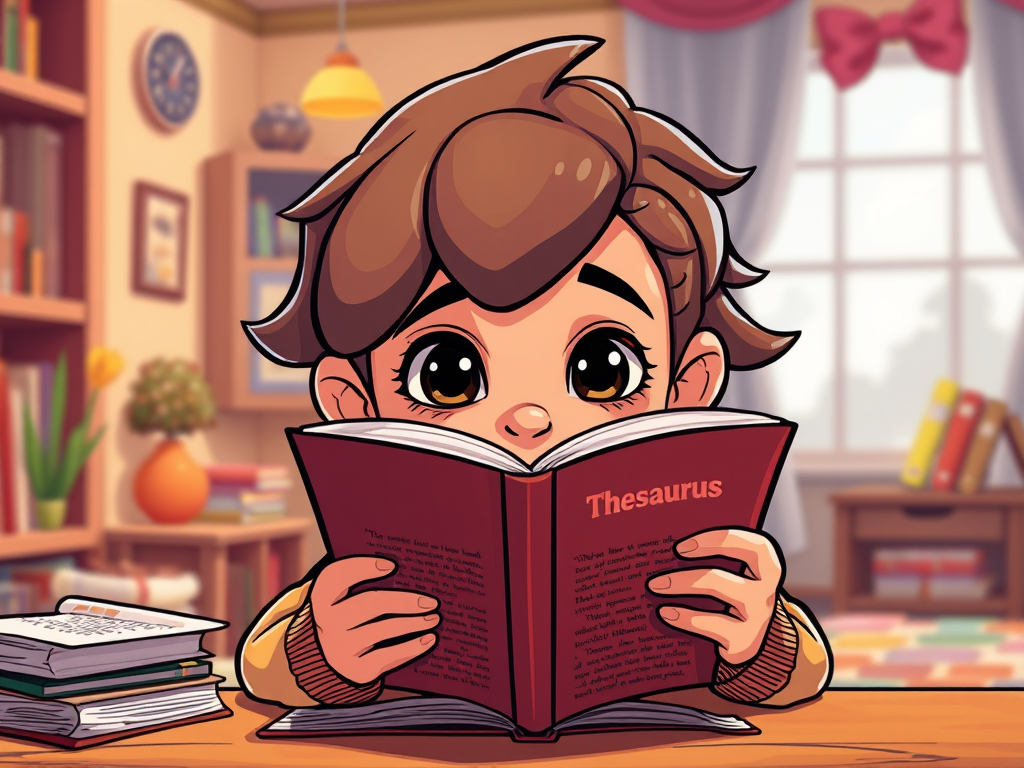
Most language learners fall into the trap of using the same vocabulary all the time. STOP! You can improve your language skills by using a wider range of vocabulary, so why not learn some synonyms?
If you haven’t yet got one, buy yourself an English thesaurus and learn how to use it to your advantage. Now, when you want to describe something, you don’t have to use the same, tired adjectives every time, you can really start to play with vocabulary. What’s the weather like today? It’s not just “cold”, it’s “icy” or “bitter”. What colour is the horse? It’s not “brown”, it’s “chestnut”, “mahogany” or “chocolate”.
You will not only enrich your vocabulary, but you will also improve your written work by making it more interesting for your reader!
Are you planning to try any of these tips? Let me know how you get on by leaving a comment below. I’d love to hear from you!
 Fern's English
Leave a comment